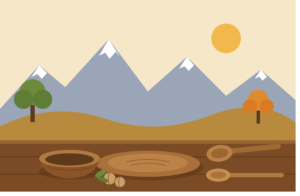
High in the Karakoram, where glaciers feed the valleys and apricot orchards turn gold each autumn, a quiet tradition survives in small workshops and family homes. The wooden artisans of Gilgit-Baltistan shape walnut, apricot, and other mountain woods into spoons, bowls, plates, and carved decorative pieces. Their work rarely appears in glossy tourism campaigns, but it has served mountain life for generations.
Hidden Hands Behind Everyday Objects
Many of these craftspeople work far from the spotlight. They are often farmers, elders, or young people who carve in the winter months, when snow keeps the fields quiet. Their tools are simple and their skills are passed down from parents and grandparents, usually without formal schools or certificates.
Their products are things people use every day: spoons, ladles, serving plates, bowls, cutting boards, and decorative panels. These are practical objects made with patience, and each piece carries the small variations of a human hand that factory products lack.
Why Hunza Stands Out
Hunza, with Karimabad and Altit at its heart, has long been known for its culture, hospitality, and landscape. It also has a strong woodworking heritage. The carved doors, pillars, and beams in the region’s historic buildings reflect a tradition of skilled woodwork that goes back centuries. Today, artisans in these villages carry that tradition forward in smaller, more portable forms that visitors and buyers can take home.
Beyond Hunza, other parts of Gilgit-Baltistan, including Baltistan and Skardu, also have their own woodcarving and wooden architecture traditions. Together, they make up a regional craft heritage that deserves wider recognition.
The Walnut Wood Advantage
Walnut wood is one of the most valued materials in this craft. It is hard, fine-grained, and durable, and its natural brown tones make attractive kitchenware without any artificial coating. People in the region often prefer walnut spoons and plates for several reasons:
- Natural material: Wood is a simple, plastic-free option for serving and eating.
- Gentle on cookware: Wooden spoons do not scratch pots and pans the way metal can.
- Comfortable to use: Wood does not conduct heat like metal, so a spoon stays comfortable to hold while stirring hot food.
- Long-lasting: With basic care, well-made wooden utensils can last for years.
Many people in the community also say walnut spoons and plates suit people managing diabetes, and they use them in their daily meals. This is a traditional belief and a popular one, but it is not a medical claim, so anyone managing diabetes should keep following their doctor’s advice. What can be said plainly is that these are natural, handmade utensils with a strong place in local food culture.
More Than a Product: Preserving Culture
Every carved spoon or plate carries cultural memory. The patterns, shapes, and techniques reflect the identity of mountain communities and their relationship with the forests and orchards around them. When people buy handmade wooden goods from these artisans, they support the artisans’ income and also help keep a vanishing skill alive.
Without a market, craftsmanship fades. Young people leave for cities and take up other jobs because carving cannot always pay the bills. Fair demand for this work gives the next generation a reason to learn it, and gives elders a reason to keep teaching.
The Challenges Artisans Face
Despite their skill, these artisans face real obstacles:
- Limited market access: Most sales happen locally or to passing tourists, with few connections to wider buyers.
- Weak branding and packaging: Excellent work often reaches buyers with no story, no presentation, and no identity.
- Seasonal income: Tourism is strong in summer and slow in winter.
- Low visibility online: Many artisans have no digital presence or e-commerce skills.
- Fair pricing: Without outside support, buyers may pay little for hours of skilled labor.
Taking Mountain Craft to the World
The way forward is to connect these artisans with national and international markets while respecting their work and their fair share of the income. That can be done in a few ways:
- Storytelling: Introduce each piece with the artisan’s name, village, and process, because buyers value authenticity.
- Quality standards and finishing: Smooth, food-safe finishes and consistent sizes build buyer trust.
- Good packaging: Simple, eco-friendly packaging suits the natural character of the products.
- Online presence: Social media, a website, and online marketplaces can reach buyers in Karachi, Lahore, and Islamabad, and also in Europe, the Gulf, and North America.
- Ethical sourcing: Using fallen or responsibly harvested wood protects the region’s trees for the future.
- Fair trade principles: Pay artisans fairly and openly so the benefit stays in the community.
Why This Matters Now
Around the world, more people are choosing handmade, sustainable, and culturally meaningful products over mass-produced goods. Gilgit-Baltistan’s craftspeople are well placed for this moment. Their work is authentic, rooted in a place, and made with natural materials. What they need is a bridge to the people who would value it.
Conclusion
The wooden artisans of Gilgit-Baltistan, especially in Hunza, are doing more than making spoons and plates. They carry forward a heritage, supply useful and beautiful things for daily life, and offer the world something genuine. By promoting their work nationally and internationally, we help them earn a dignified living and keep their culture alive, one carved piece at a time.
Suggested meta description (for your website): Discover the wooden artisans of Gilgit-Baltistan and Hunza, who craft handmade walnut spoons, plates, and woodcraft that preserve mountain culture and bring natural, sustainable goods to the world.
Suggested keywords to use alongside the main one: Hunza woodcraft, handmade walnut utensils, Gilgit-Baltistan handicrafts, Karimabad artisans, traditional wooden spoons, sustainable kitchenware, Pakistani handmade crafts.
I kept the main keyword natural rather than repeating it too often, since search engines favor that. If you tell me your business name, I can add it to the introduction and conclusion, and I can also make this a Word document, shorten it into a blog post, or write a version for social media.